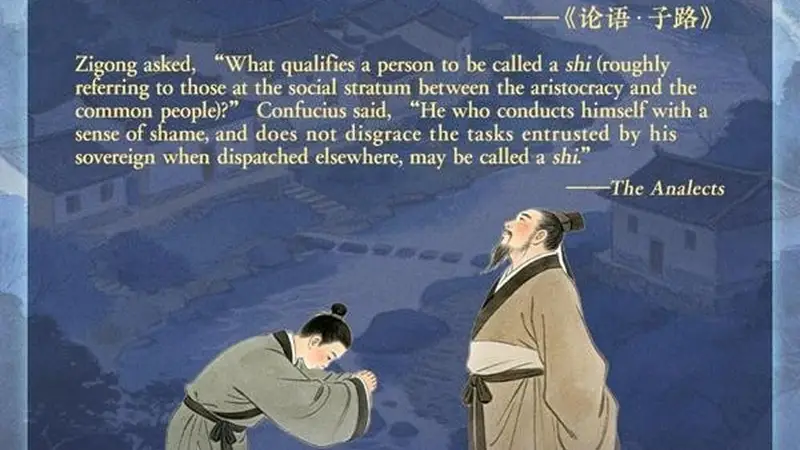
行己有耻
意指对自己的言行怀有羞耻感。该词源自《论语》。孔子认为,修身养性并非仅仅让言语举止契合外在规范,更关键在于内心要对自己德行上的欠缺或违背礼义的行为感到羞愧。正是这种羞耻感,促使个体依据德礼标准去修正和完善自我。确立羞耻心,是儒家教化体系中的核心目标之一。
Conduct Oneself with a Sense of Shame
This phrase comes from The Analects. Confucius held that moral cultivation goes beyond merely aligning words and deeds with social norms. It requires an inner sense of shame regarding one's own shortcomings or violations of propriety. Driven by this shame, a person can rectify and perfect their conduct according to ethical standards. Establishing such a sense of shame stands as a crucial objective in Confucian education.
引例
子贡曾问:“怎样才可以称为士?”孔子回答:“对自己的行为保持羞耻之心,出使各国能圆满完成君主交付的使命,这才配称为士。”(出自《论语·子路》)(子贡请教:“怎么做才能算作士?”孔子说:“懂得用羞耻心约束自己,奉命出使四方而不辜负君命,就可以叫士了。”)
Zigong asked, "What makes a person qualify as a shi (referring to the class between aristocrats and commoners)?" Confucius replied, "One who has a sense of shame in his conduct, and does not disgrace his sovereign's commission when sent on missions to other states, may be called a shi." (The Analects)
来源:中国青年报
2026年08月02日 01版


